

*Note – this article is not medical advice, and should not be used as such. It is for information purposes only.
We don’t often talk about our vagus nerve, but this incredible nerve is central to so many issues that arise in coaching and therapy. The Vagus Nerve influences our mood, emotions and overall well-being and emerging research indicates that the vagus nerve impacts our mental health including our stress responses and emotional regulation.
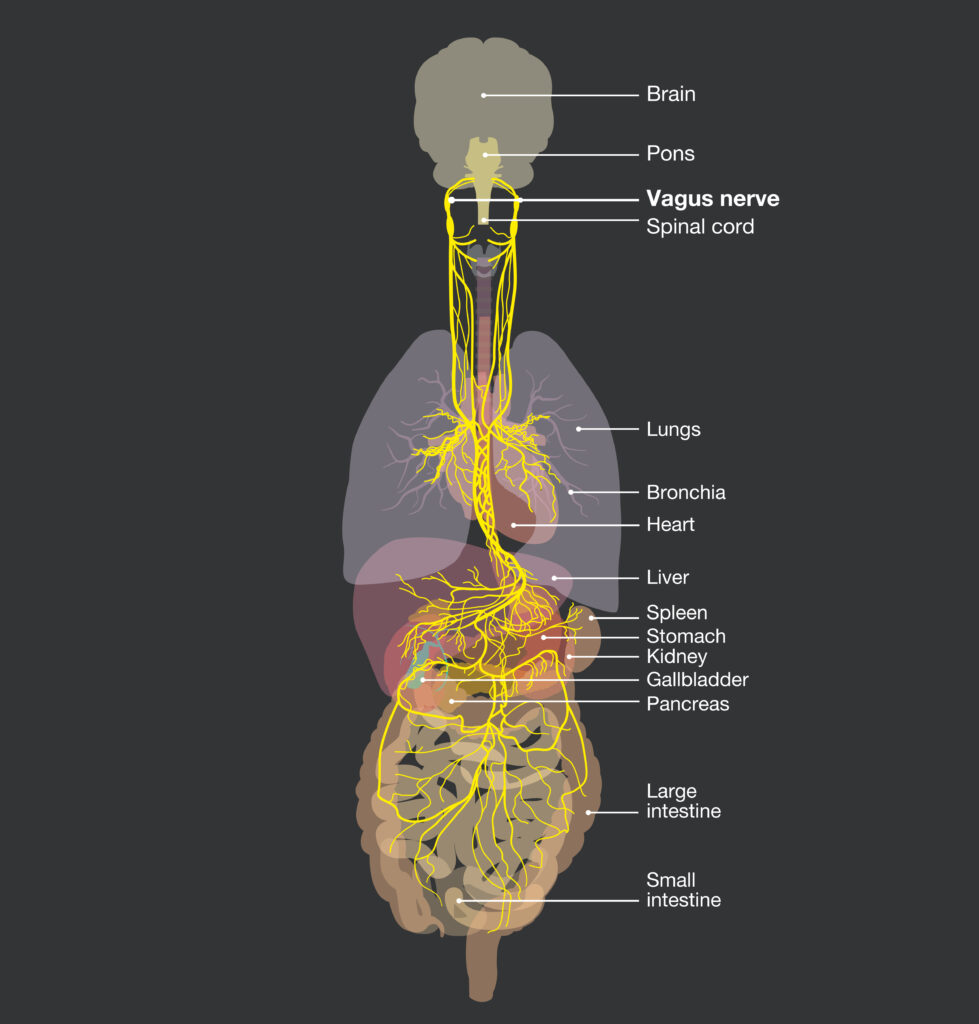
The Vagus Nerve is also known as the tenth cranial nerve or the CN X. It is one of the most important nerves in the body and also the longest! The Vagus Nerve runs from the brainstem and interconnects with multiple organs in the body, and ends at the colon. It carries electrical impulses between the brain and body – and back again! The Vagus Nerve exits from your medulla oblongata in your lower brainstem and it passes through, and/or connects with:
- Your neck (between carotid artery and jugular vein)
- Chest (thorax)
- Heart
- Lungs
- Abdomen and digestive tract
The Vagus Nerve is known as a paired nerve, which means that it has a left vagus nerve and a right vagus nerve. It plays an important part in our parasympathetic nervous system (Rest and Digest) and it works to counterbalance the sympathetic nervous system (fight flight system) looking to create a state of relaxation.
Our vagus nerve is part of our parasympathetic nervous system, also known as ‘Rest and Digest’. The other part is our sympathetic nervous system, also known as ‘Fight and Flight’, which in totality create our autonomic nervous system. Therefore, our vagus nerve has an important role in how we experience the world. For someone whose vagus nerve is regulated, they will feel safe and secure, regulated and able to approach the world. Whilst someone whose vagus nerve is under or over stimulated, they may experience physical and emotional responses to this. Whilst someone whose vagus nerve is dysregulated can experience a wide range of symptoms, and may comment on feeling unsafe, finding it hard to relax or unwind.
Overstimulated – Also referred to as hypersensitive or irritated – caused by trauma, chronic stress, chronic illness or inflammation, gastrointestinal issues, some medications and substances
An overstimulated vagus nerve can present as symptoms such as anxiety, fatigue, chronic pain, dizziness, lightheadedness, poor focus, inflammation, emotional difficulties, headaches etc
Understimulated – Reducing function creating symptoms – caused by a sedentary lifestyle, nutrition, poor sleep, unhealthy lifestyle choices, age, medications and substances
An understimulated vagus nerve can result in symptoms such as feelings of helplessness, nervousness, reduced heart rate variability, digestive issues, difficulty regulating emotions, or decreased ability to relax.
This article is not in replacement of medical advice, so if you have any concerns it is important to consult with a healthcare professional for proper evaluation and management if experiencing symptoms related to vagal tone or function.
How can we help ourselves?
Some simple strategies to integrate into our lives, and those of the children we work with (or at home) to help us develop a calmer nervous system include:
- SINGING – As the vagus nerve runs up our neck, activating our vocal chords can support us to activate it. Therefore, singing is a great method of relaxation.
- HUMMING – Much like singing, humming activates the vagus nerve through the vocal chords
- GARGLING – Gargling is also a simple strategy to activate the vocal chords and therefore the vagus nerve
- LAUGHTER – Laughter activates the vagus nerve, reduces blood pressure and improves mood. It has been found to be associated with improved well-being
- ASMR – ASMR (Autonomous Sensory Meridian Response) tracks create a brain tingle, reduce heart rate and calm the mind
- Bilateral Stimulation – Using binaural frequencies to stimulate the vagus nerve helps both sides of the brain work together harmoniously
Want to learn more?
If you want to learn more about mental health you can join our Level 4 training (here) or keep an eye out for our new specialist online courses coming soon (here).
© Nicky Edwards – All Rights Reserved
Further Support
You can read more about by downloading our FREE Ebooks
You can learn more about child mental health by visiting our courses
You can find therapeutic story books to support your child and audios in our shops.
You can find therapeutic stories and hypnotherapy audios to support children in our shop.